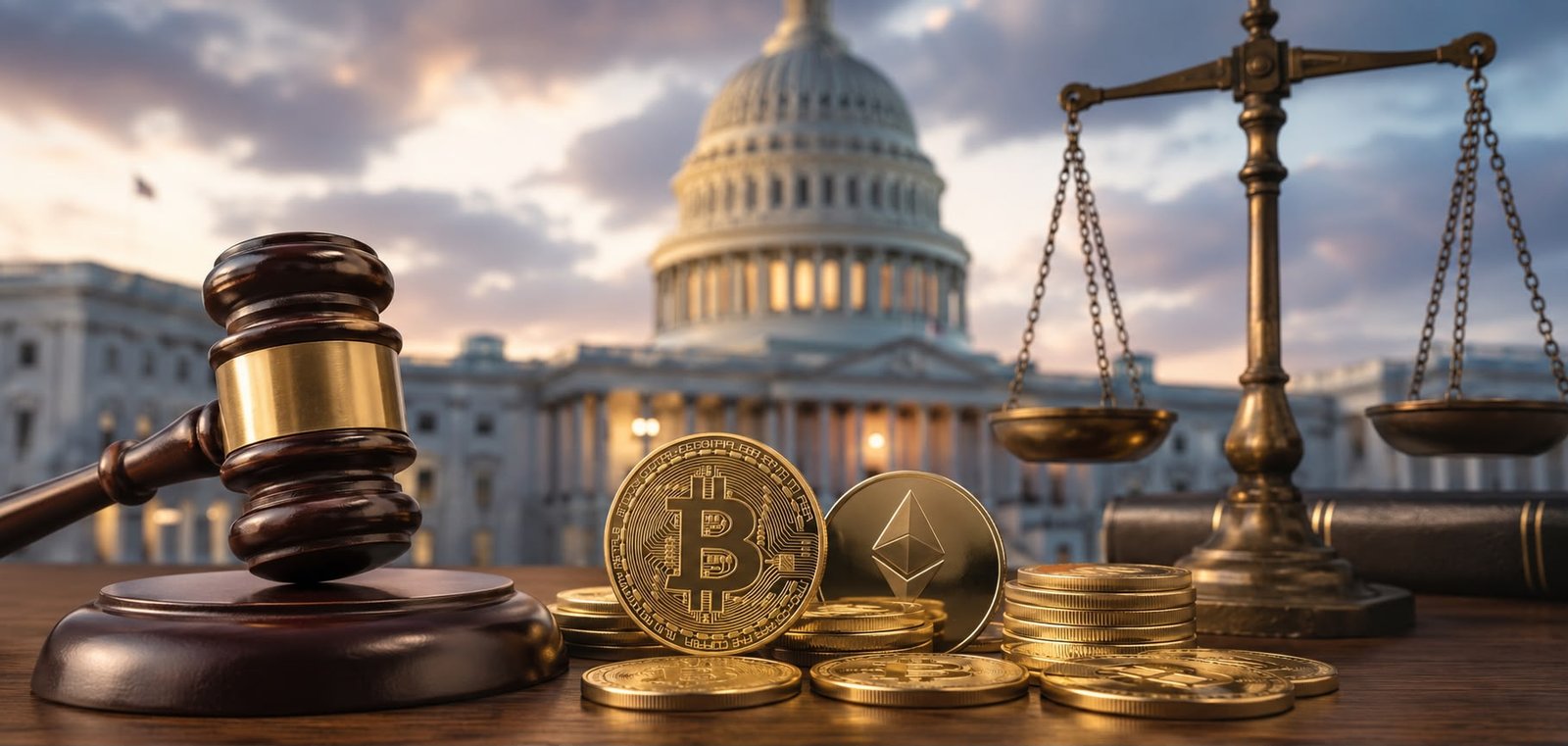
Cryptocurrency markets have entered a new era where regulation often carries as much influence as technological innovation or price momentum. While Bitcoin, Ethereum, and thousands of other digital assets continue to evolve, governments around the world are working to establish legal frameworks that provide greater certainty for investors, businesses, and financial institutions. Among the most closely watched developments is the CLARITY Act, a proposed piece of U.S. legislation aimed at creating a clearer regulatory structure for digital assets. Although the proposal has generated considerable attention within the cryptocurrency industry, it remains under discussion and has not yet become law. Nevertheless, market participants across the globe are closely following its progress because any significant regulatory change in the United States has the potential to influence the entire digital asset ecosystem. The debate surrounding the CLARITY Act reflects a broader challenge faced by governments worldwide: how to encourage innovation while protecting consumers, maintaining financial stability, and ensuring that emerging technologies operate within transparent legal boundaries. This article examines the objectives of the proposed legislation, why it matters to investors and businesses, how markets have responded, and what the future may hold for cryptocurrency regulation in the United States. The Growing Importance of Crypto Regulation Since Bitcoin was introduced in 2009, cryptocurrencies have transformed from an experimental concept into one of the world’s fastest-growing financial sectors. What began as a decentralized payment system has expanded into a complex ecosystem that includes decentralized finance (DeFi), non-fungible tokens (NFTs), blockchain infrastructure, stablecoins, tokenized assets, and Web3 applications. This rapid expansion has attracted millions of investors and billions of dollars in institutional capital. At the same time, it has introduced new legal and regulatory challenges that existing financial laws were not originally designed to address. Questions continue to emerge regarding investor protection, taxation, anti-money laundering compliance, market manipulation, cybersecurity, custody requirements, and the legal classification of digital assets. As governments attempt to answer these questions, regulatory announcements have become one of the strongest drivers of cryptocurrency market sentiment. Unlike traditional financial markets, where regulations have developed over decades, cryptocurrency regulation remains relatively new and continues to evolve. This creates uncertainty for investors and companies alike. Why the United States Matters The United States remains one of the world’s largest financial markets and is home to many of the leading cryptocurrency exchanges, blockchain startups, venture capital firms, technology companies, and institutional investors. Because of its global financial influence, regulatory decisions made in Washington frequently affect digital asset markets worldwide. International exchanges often adjust their compliance policies based on U.S. regulatory standards, while institutional investors closely monitor American legislation before increasing their exposure to cryptocurrencies. For this reason, proposed legislation such as the CLARITY Act attracts attention far beyond U.S. borders. European investors, Asian blockchain companies, Middle Eastern sovereign funds, and global fintech firms all recognize that regulatory clarity in the United States could influence future investment strategies across the industry. What Is the CLARITY Act? The CLARITY Act is designed to provide greater legal certainty for digital assets by clarifying how cryptocurrencies should be regulated under U.S. law. One of the industry’s longest-running debates concerns whether certain cryptocurrencies should be classified as securities or commodities. This distinction is important because different government agencies oversee different financial products. When legal definitions remain unclear, companies may struggle to understand which regulations apply to their operations. Supporters believe the legislation could reduce confusion by establishing clearer responsibilities for regulators and market participants. The proposal also seeks to improve transparency while encouraging responsible innovation within the blockchain industry. Although details may continue to evolve during the legislative process, the overall objective is to create a more predictable regulatory environment that benefits both investors and businesses. Why Regulatory Clarity Is Important Legal uncertainty creates challenges for nearly everyone involved in cryptocurrency markets. Investors may hesitate to allocate capital if they are unsure how regulations might change in the future. Businesses may delay expansion plans due to uncertainty regarding licensing requirements, reporting obligations, or compliance costs. Developers may relocate projects to jurisdictions with more clearly defined legal frameworks. Financial institutions often require regulatory certainty before introducing new cryptocurrency investment products or custody services. A clearer legal environment may encourage greater participation from institutional investors, who generally prefer operating within established regulatory frameworks. For many industry participants, predictable rules are viewed as an essential foundation for long-term market growth. Industry Response The cryptocurrency industry has expressed a wide range of opinions regarding the proposed legislation. Some executives argue that clearer regulations would strengthen investor confidence and encourage responsible innovation. They believe that transparent legal standards could reduce uncertainty, improve market integrity, and support sustainable industry growth. Others caution that excessive regulation could increase compliance costs, create barriers for startups, and potentially slow technological development. Many industry leaders emphasize that effective regulation should strike a balance between consumer protection and innovation rather than favoring one objective at the expense of the other. This ongoing discussion reflects the broader challenge faced by policymakers worldwide. Investor Sentiment Financial markets frequently react to regulatory developments before new laws are officially implemented. Even preliminary announcements or legislative discussions can influence cryptocurrency prices. Positive regulatory signals are often interpreted as reducing uncertainty, while unexpected delays or political disagreements may contribute to short-term volatility. However, experienced analysts generally caution against making investment decisions based solely on individual news events. Cryptocurrency prices remain influenced by multiple factors, including macroeconomic conditions, interest rate expectations, institutional investment flows, technological upgrades, blockchain adoption, and overall market sentiment. As a result, regulatory developments should be viewed as one component within a much broader investment landscape. The Role of Institutional Investors Institutional participation has become one of the defining trends in modern cryptocurrency markets. Large investment firms, asset managers, hedge funds, pension funds, and financial institutions continue exploring opportunities within digital assets. However, many institutional investors operate under strict compliance requirements. Before allocating significant capital, these organizations typically seek legal certainty regarding custody, taxation, reporting obligations, and regulatory oversight. Supporters of regulatory clarity argue that comprehensive
A New Era for Bitcoin ETFs? Institutional Investors’ Moves Draw Close Market Attention
The cryptocurrency market has entered another period of heightened activity in recent days. In particular, renewed inflows into U.S. spot Bitcoin exchange raded funds (ETFs), following an extended period of net outflows, have captured the attention of investors worldwide. While this development alone is not enough to confirm a shift in the market’s overall direction, it is widely regarded as an important indicator of institutional investor sentiment. Bitcoin was once considered an asset primarily favored by retail investors. In recent years, however, it has increasingly attracted the attention of major investment funds and financial institutions. The introduction of spot Bitcoin ETFs has allowed investors to gain exposure to Bitcoin’s price movements without purchasing or storing the cryptocurrency directly through digital asset exchanges. As a result, digital assets have become more closely integrated with the traditional financial system. According to market analysts, the recent recovery in spot Bitcoin ETF inflows may indicate a modest improvement in institutional investors’ risk appetite. However, experts caution that it is still too early to conclude that a long-term bullish trend has begun based on only a few days or weeks of data. Financial markets are influenced by a wide range of factors, and ETF flows represent only one piece of the overall picture. Developments in the global economy over recent months have also had a significant impact on the cryptocurrency market. Central bank monetary policies, inflation data, geopolitical events, and overall investor risk sentiment continue to influence the prices of Bitcoin and other digital assets. As a result, market participants are paying close attention not only to cryptocurrency related news but also to broader economic indicators and global financial developments. Analysts suggest that continued inflows into spot Bitcoin ETFs could be interpreted as a positive signal for the market. On the other hand, increasing economic uncertainty or a renewed shift toward traditional safe haven assets could contribute to ongoing volatility in cryptocurrency prices. Another important trend attracting attention is the long term investment strategy adopted by institutional investors. Large asset managers and investment funds typically focus on long-term growth potential rather than short term price fluctuations. For this reason, ETF flow data provide valuable insight not only into daily market movements but also into the broader positioning of institutional capital. Despite recent optimism, the cryptocurrency market remains highly volatile. Financial experts continue to emphasize that investment decisions should not be based solely on social media discussions or shor term price movements. Instead, investors are encouraged to consider verified information from reliable sources, economic data, and their own financial objectives and risk tolerance before making investment decisions. Looking ahead, upcoming economic data releases, central bank communications, and capital flows into spot Bitcoin ETFs are expected to remain among the key factors influencing market sentiment. Consequently, investors are advised to monitor not only price charts but also the broader global economic landscape. Disclaimer: This article is intended for informational purposes only and should not be considered financial or investment advice.

Germany’s Industrial Slowdown in 2026 Raises Concerns for Europe and Türkiye
NEW YORK, April 20, 2026 Germany’s industrial slowdown in 2026 is becoming a growing concern not just for Europe, but also for countries like Türkiye that are closely tied to its economy. As Europe’s largest economy, Germany has long been powered by its strong manufacturing sector. But recent developments suggest that this engine is losing momentum. Rising Energy Costs Are Hitting Industry Hard One of the biggest challenges facing German industry right now is the sharp increase in energy costs. Sectors like automotive, chemicals, and heavy manufacturing rely heavily on stable and affordable energy. Over the past year, electricity and natural gas prices have remained high, putting serious pressure on production costs. For many companies, this means tighter margins, reduced output, or even considering moving parts of their operations abroad. Global Demand Is Slowing Down Germany’s economy depends heavily on exports, and that’s where another problem is emerging. Demand from key markets is weakening. China’s slower growth, combined with soft demand across Europe and uncertain conditions in global markets, is reducing orders for German products. The automotive sector, in particular, is feeling the impact as it navigates both declining demand and the transition to electric vehicles. Signs of a Broader Industrial Slowdown Recent data points to a clear trend. Factory orders are declining, production levels are slipping, and companies are becoming more cautious about new investments. While this doesn’t necessarily mean a deep recession is coming, it does suggest that growth could remain very limited in the near term. For a country that has long been Europe’s economic backbone, even a period of stagnation is significant. Structural Challenges Are Adding Pressure Beyond short term issues, Germany is also dealing with deeper structural challenges. The transition to green energy, while necessary, comes with high costs. At the same time, there is a growing shortage of skilled workers, and progress in digital transformation has been slower than expected. Bureaucratic hurdles are also making it harder for businesses to adapt quickly. These long term issues are making it more difficult for Germany to stay competitive on a global scale. What This Means for Türkiye Germany’s slowdown matters a lot for Türkiye. As one of Türkiye’s largest trading partners, any change in German demand can directly affect Turkish exporters. Industries that could feel the impact include automotive suppliers, textiles, and machinery. A drop in German orders may lead to lower export volumes and reduced revenue. However, this situation could also create opportunities. Türkiye’s flexible manufacturing base and strategic location could help it position itself as an alternative supplier in global supply chains. Looking Ahead Economists believe that Germany’s current slowdown could be temporary, but much depends on how policymakers respond. Reducing energy costs, supporting industry, and accelerating digital and green investments will be key. For Türkiye, this is a moment to adapt. Diversifying export markets and focusing on higher value production could help reduce dependence on a single market. Germany’s industrial slowdown in 2026 is a reminder of how interconnected today’s economies are. What happens in one country can quickly ripple across regions. For Europe, it raises questions about growth and stability. For Türkiye, it presents both risks and opportunities. The coming months will be crucial in shaping how this story unfolds.
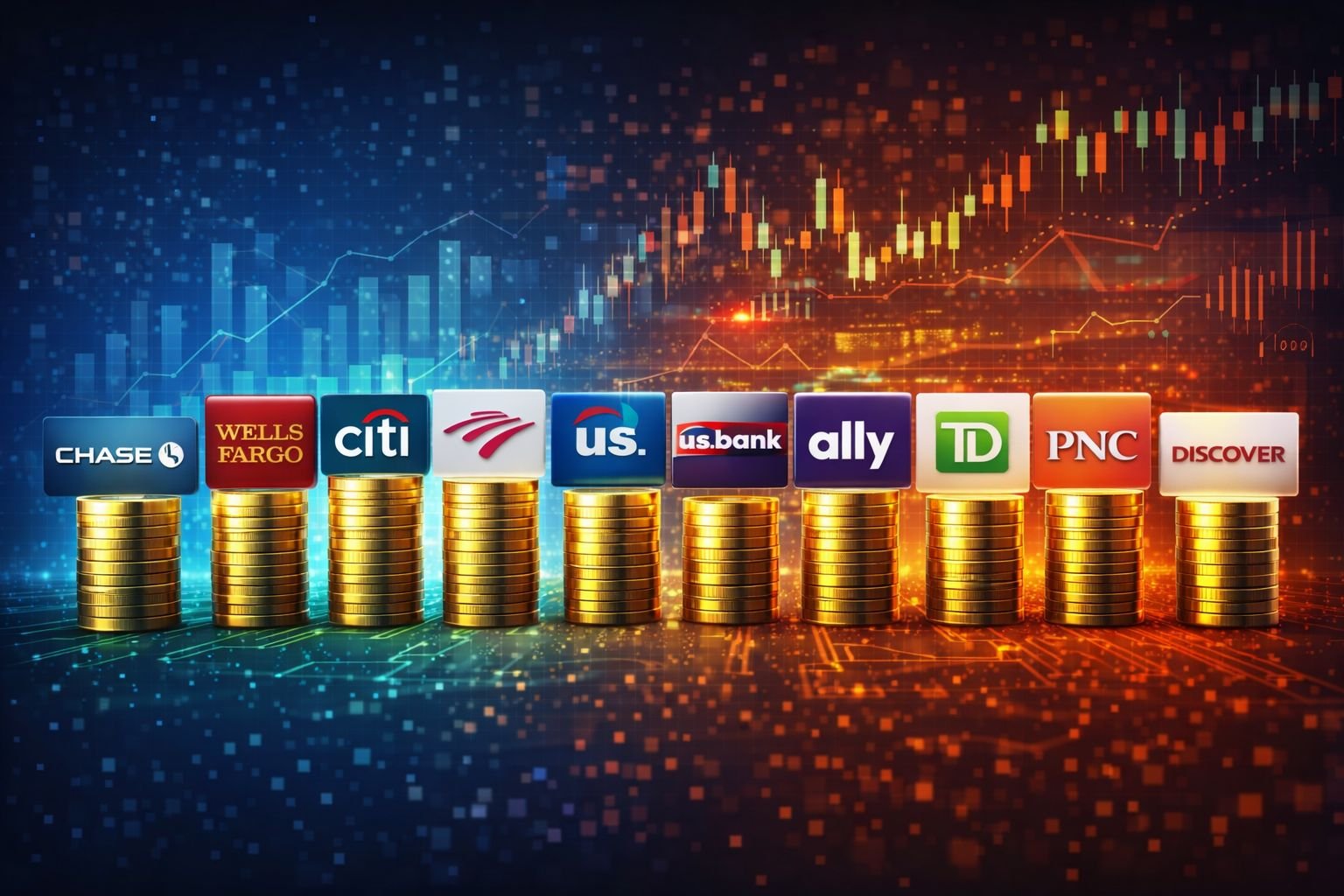
Top 10 Banks in the US Ranked by Fees and Features
Choosing the right bank can make a significant difference in how you manage your money. In the United States, there are many banking options available, each offering different fee structures, features, and services. This article provides an overview of the top 10 banks in the US ranked by fees and features, helping readers understand key differences without promoting any specific financial decision. What to Consider When Choosing a Bank Before exploring the list, it is important to understand what factors are commonly considered:• Monthly maintenance fees• ATM access and charges• Online and mobile banking features• Customer service quality• Minimum balance requirements These factors may vary depending on individual preferences and financial needs. Top 10 Banks in the US Ranked by Fees and Features One of the largest banks in the US, offering a wide range of services, strong mobile banking features, and extensive ATM access. Fees may apply depending on account type. Known for its nationwide presence and digital tools. It offers various account options, although some accounts may include maintenance fees. Provides a broad range of financial products with many branch locations. Fee structures vary depending on the account. Offers strong international banking services and competitive digital features. Fees and benefits depend on account tiers. Popular for its low fee structure and user friendly mobile app. It may appeal to users looking for fewer traditional banking fees. An online only bank known for no monthly maintenance fees on many accounts and high interest savings options. Offers a mix of traditional and digital banking services, including budgeting tools and flexible account options. Provides reliable services with a strong reputation for customer support and a wide range of account types. Known for extended branch hours and customer friendly services. Fees vary depending on account selection. An online bank offering competitive savings accounts and minimal fees, with strong digital banking tools. Comparing Fees and Features When comparing these banks, it becomes clear that:• Traditional banks often provide more physical branch access• Online banks may offer lower fees and higher savings rates• Features like mobile apps and budgeting tools are increasingly important The right choice depends on how individuals prefer to manage their finances. Important Considerations Banking needs can differ widely from person to person. Some individuals may prioritize convenience, while others may focus on minimizing fees or maximizing digital features. It is important to review each bank’s terms and conditions before opening an account. The top 10 banks in the US ranked by fees and features each offer unique advantages. While some banks stand out for their digital services, others are known for branch accessibility or customer support. Understanding these differences can help individuals choose a bank that aligns with their needs. Disclaimer This article is for informational purposes only and does not constitute financial advice. Banking terms, fees, and features may change. Always review official sources before making financial decisions.
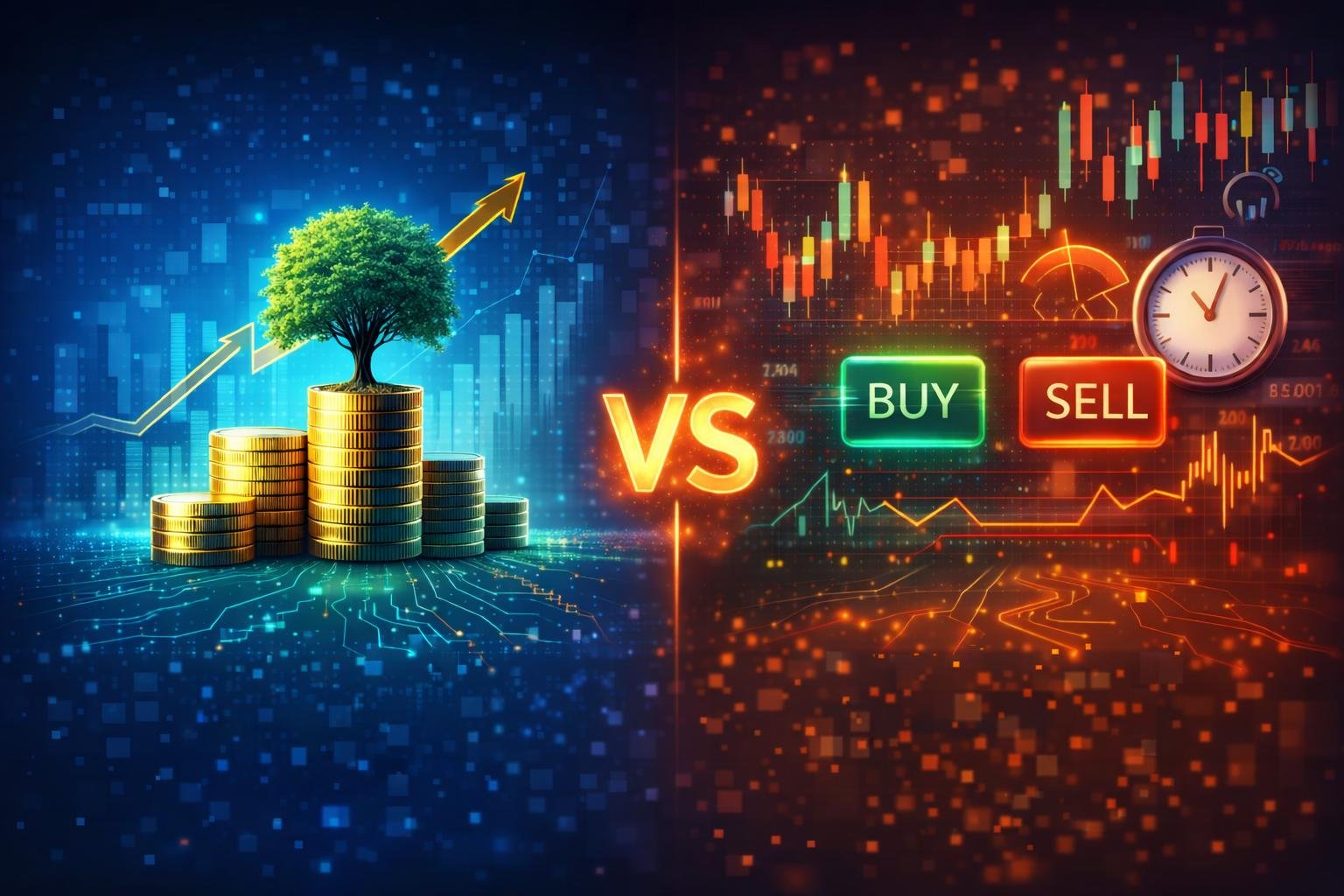
Why Long Term Investing Can Be More Beneficial Than Short Term Trading
Long term investing is a widely used strategy for building wealth over time. Many people entering the financial world often ask whether long term investing or short term trading is the better approach. While both strategies have their own advantages and risks, long term investing is often seen as a more stable and manageable option for many individuals. In this article, we will explore why long term investing can be more beneficial than short term trading, without suggesting any specific financial decisions. What Is Long Term Investing? Long term investing refers to holding assets such as stocks, ETFs, or other financial instruments for an extended period, often years or even decades. This approach focuses on gradual growth over time rather than quick profits. Investors who prefer long term strategies usually aim to benefit from overall market growth. What Is Short Term Trading? Short term trading involves buying and selling assets within a short period, sometimes within days or even hours. This strategy often requires:• Constant market monitoring• Quick decision making• Higher tolerance for risk Short term trading can be more active and time consuming. Key Differences Between Long Term Investing and Short Term Trading Long term investing typically requires less daily attention, while short term trading often involves frequent monitoring of the market. Long term investing may help reduce the impact of short term market fluctuations. On the other hand, short term trading can be more sensitive to sudden price changes. Short term trading can involve higher emotional stress due to rapid market movements. Long term investing is often considered less stressful for many people. Frequent trading may lead to higher transaction costs, while long term investing generally involves fewer transactions. Why Long Term Investing Can Be Advantageous Long term investing is often preferred by individuals who want a more passive approach to managing their finances. Some commonly mentioned advantages include:• Potential to benefit from long term market trends• Reduced need for constant decision making• Lower transaction frequency• A more disciplined investment approach However, these advantages may vary depending on individual goals and market conditions. Factors to Consider It is important to understand that both strategies come with risks. Market conditions, personal financial goals, and risk tolerance can all influence outcomes. There is no single approach that works for everyone. Each individual may choose a strategy based on their own situation. The Role of Patience in Long Term Investing Patience is often considered a key element in long term investing. Markets may fluctuate in the short term, but long term strategies focus on broader trends rather than daily movements. This approach may help some investors stay consistent over time. Why long term investing can be more beneficial than short term trading is a topic that depends on many factors. While long term investing is often seen as a more stable and less time intensive approach, both strategies have their place in the financial world. Understanding the differences can help individuals make informed decisions based on their own goals and preferences. Disclaimer This article is for informational purposes only and does not constitute financial advice. Investing involves risk. Always do your own research before making financial decisions.
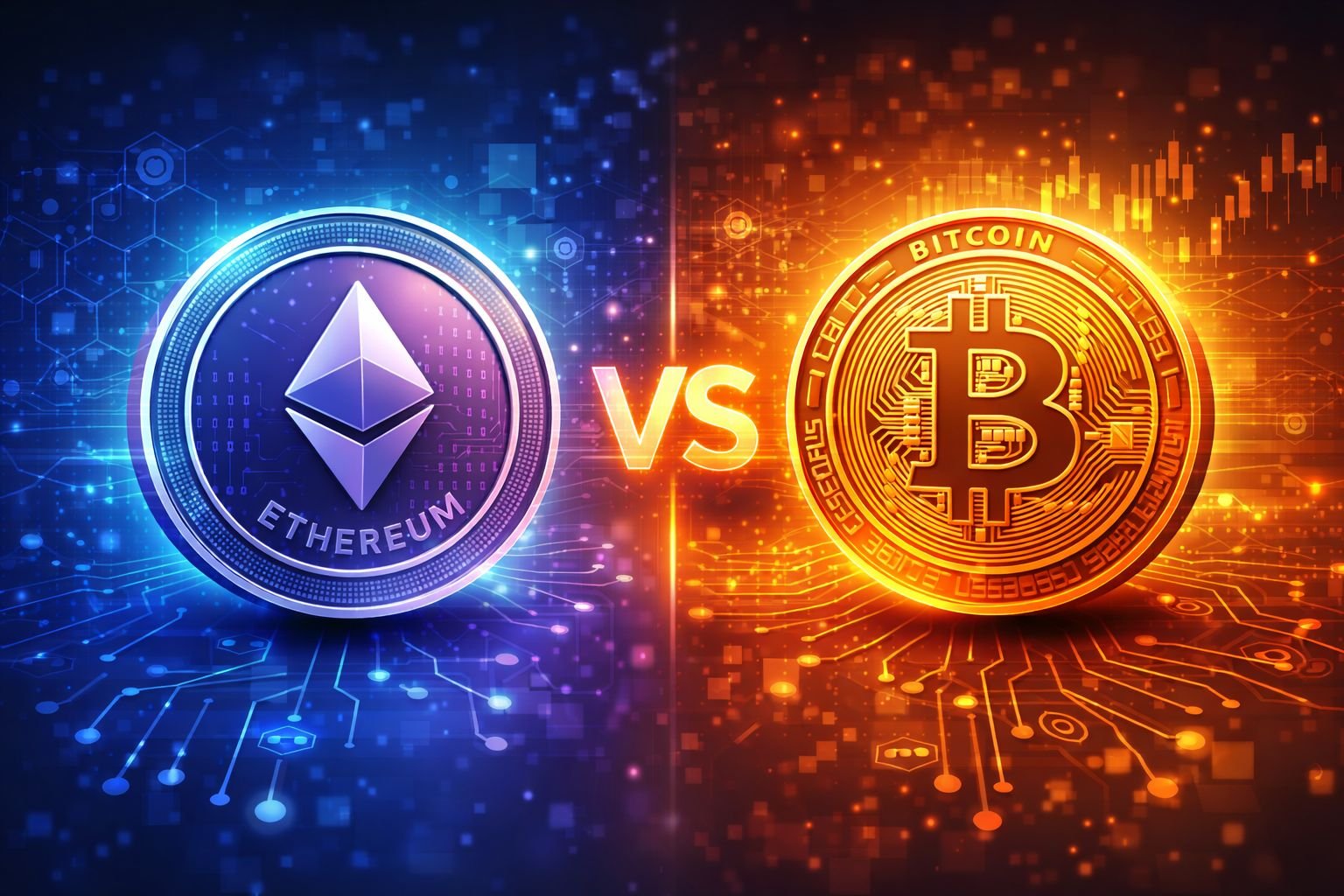
Ethereum vs Bitcoin: Key Differences You Should Know
Cryptocurrencies have become a major part of the financial world, and two names stand out the most: Ethereum and Bitcoin. While both are built on blockchain technology, they serve different purposes and offer unique advantages. In this article, we will explore the key differences between Ethereum and Bitcoin in a simple and clear way. What Is Bitcoin? Bitcoin is the first cryptocurrency, created in 2009. It was designed as a digital alternative to traditional money. Key features of Bitcoin:• Limited supply of 21 million coins• Primarily used as a store of value• Decentralized and secure• Often called “digital gold” Bitcoin focuses mainly on being a reliable and secure digital currency. What Is Ethereum? Ethereum is a decentralized platform launched in 2015 that goes beyond digital payments. Key features of Ethereum:• Supports smart contracts• Enables decentralized applications (dApps)• More flexible than Bitcoin• Widely used in Web3 and DeFi Ethereum is not just a currency. It is a technology platform for building decentralized systems. Key Differences Between Ethereum and Bitcoin Which One Is More Popular? Both cryptocurrencies are extremely popular but for different reasons.• Bitcoin is trusted as a long term store of value• Ethereum is popular among developers and tech innovators Their popularity depends on how they are used. Risks to Consider Like all cryptocurrencies, both Ethereum and Bitcoin carry risks:• High price volatility• Regulatory uncertainty• Security risks if not used properly Understanding these risks is important before engaging with crypto assets. The Future of Ethereum and Bitcoin Both Ethereum and Bitcoin are expected to remain important in the future of finance.• Bitcoin may continue as a digital store of value• Ethereum may drive innovation in decentralized applications They are not competitors in every sense, but rather complementary technologies. So, what is the difference between Ethereum and Bitcoin? Bitcoin focuses on being a secure digital currency, while Ethereum provides a flexible platform for building decentralized applications. Both have unique strengths and play important roles in the evolving digital economy.

What Is Online Banking? A Complete Guide for Beginners
The way people manage money has changed dramatically in recent years. One of the biggest changes is the rise of online banking. Today, millions of people use online banking to send money, pay bills, and manage their finances without visiting a physical bank. In this guide, we will explain what online banking is, how it works, and why it has become essential in modern life. What Is Online Banking? Online banking refers to managing your bank account through the internet using a website or mobile app. With online banking, you can:• Check your account balance• Transfer money• Pay bills• View transaction history• Manage savings and investments This means you no longer need to go to a bank branch for everyday financial tasks. How Does Online Banking Work? Online banking works through secure digital platforms provided by banks. Here is how it typically works:1. You create an account with a bank2. You log in using a secure username and password3. The bank verifies your identity using security measures4. You access your account and perform transactions Most banks also use two factor authentication to increase security. Is Online Banking Safe? Security is one of the most common concerns about online banking. The good news is that online banking is generally safe because banks use:• Encryption technology• Secure servers• Multi factor authentication• Fraud detection systems However, users must also take precautions, such as:• Never sharing passwords• Avoiding public WiFi for transactions• Using strong passwords Benefits of Online Banking Online banking offers many advantages that make it popular:• Convenience and 24 7 access• Faster transactions• Lower fees• Easy money management• Instant notifications These benefits save time and simplify daily financial tasks. Disadvantages of Online Banking Despite its advantages, online banking also has some downsides:• Requires internet access• Risk of cyber attacks• Limited face to face support• Technical issues can occur Understanding these risks helps users stay prepared. Online Banking vs Mobile Banking Many people confuse online banking with mobile banking.• Online banking is accessed through a website• Mobile banking is done through a smartphone app Both offer similar features, but mobile banking is more convenient on the go. Why Online Banking Matters Today Online banking has become essential in today’s digital world. It allows people to:• Manage finances anytime• Reduce dependency on physical banks• Access global financial services As technology continues to evolve, online banking will play an even bigger role in our daily lives. The Future of Online Banking The future of online banking looks promising with innovations such as:• Artificial intelligence in banking• Biometric security• Blockchain integration• Personalized financial services These trends will make banking faster, smarter, and more secure. So, what is online banking? It is a modern way to manage your money using the internet. Online banking offers convenience, speed, and flexibility, making it an essential tool for individuals and businesses alike. While there are some risks, using it wisely can greatly improve your financial life.

What Is Web3 and Blockchain? How It Is Changing the Internet in 2026
The internet is constantly evolving, and one of the biggest transformations today is driven by Web3 and Blockchain technology. But what do these terms actually mean, and why are they so important? In this article, we will clearly explain what Web3 and Blockchain are and how they are shaping the future of the internet. What Is Web3? Web3 represents the third generation of the internet, designed to give users full control over their data. Here is a simple breakdown of the internet evolution:• Web1: Read-only internet• Web2: Social media and user-generated content• Web3: Decentralized and user-owned internet In Web3, your data is no longer controlled by big tech companies, but by you. How Does Blockchain Technology Work? Blockchain is a system where data is stored in blocks that are linked together in a secure chain. Key features include:• No central authority• Immutable records• Transparent and verifiable transactions This makes blockchain highly secure and trustworthy. The Relationship Between Web3 and Blockchain If Web3 is the new version of the internet, Blockchain is the technology that powers it. Web3 = The new internet modelBlockchain = The infrastructure behind it Without blockchain, Web3 would not function as a decentralized system. Advantages of Web3 Web3 and Blockchain technology offer several benefits:• Users own their data• Resistant to censorship• Eliminates intermediaries• More secure transactions These advantages are especially impactful in finance and digital ownership. Disadvantages and Risks of Web3 Like any emerging technology, Web3 also has challenges:• Can be difficult to use• Lack of clear regulations• Risk of scams and fraud• Market volatility It is important to stay informed and cautious. Use Cases of Web3 Web3 goes far beyond cryptocurrencies. Here are some key areas:• Cryptocurrencies (Bitcoin, Ethereum)• NFTs (digital assets)• DeFi (decentralized finance)• Blockchain-based gaming These sectors are growing rapidly. Web3 Trends in 2026 In 2026, several trends are shaping the Web3 space:• Increased adoption by large companies• Integration with the metaverse• Combination of AI and blockchain• Digital identity systems These innovations are redefining the internet experience. The Future of Web3: Will It Really Change the Internet? Many experts believe Web3 has the potential to transform the internet. However, this transition will take time. Web2 will likely continue to exist, but Web3 could introduce a more open and user-controlled digital world. Conclusion: Is It Worth Getting Into Web3 Now? Web3 and Blockchain offer massive opportunities, but they also come with risks. For beginners:• Start with small investments• Always do your research• Use trusted platforms
ETF Investing in 2026: Why More Americans Are Turning to Low – Cost Funds for Long -Term Growth
ETF investing in 2026 is gaining significant momentum as more Americans turn to low-cost funds for long-term growth and financial stability. With ongoing market volatility, inflation concerns, and uncertainty around interest rates, exchange-traded funds (ETFs) have become a preferred investment choice for both beginners and experienced investors. Unlike individual stocks, ETFs allow investors to gain exposure to a diversified portfolio of assets, reducing risk while maintaining growth potential. As a result, ETF investing continues to play a central role in modern portfolio strategies across the United States. What Is Driving the Growth of ETF Investing in 2026 Several key factors are contributing to the rise of ETF investing in 2026. One of the most important is cost efficiency. ETFs typically have lower expense ratios compared to actively managed funds, making them an attractive option for long-term investors. Another factor is accessibility. With the growth of commission-free trading platforms, more individuals can easily invest in ETFs without paying high fees. This has opened the door for a new generation of investors who are focused on building wealth over time. Additionally, market uncertainty has encouraged investors to seek diversified and stable investment options. ETFs provide exposure to entire sectors, indexes, or themes, making them a practical solution during volatile periods. Popular ETF Strategies Among US Investors American investors are increasingly adopting specific ETF strategies to maximize returns and manage risk. One of the most common approaches is investing in broad market index ETFs, such as those tracking the S&P 500. These funds offer exposure to large-cap U.S. companies and are often considered a foundation for long-term portfolios. Dividend ETFs are also gaining popularity, particularly among investors seeking passive income. These funds focus on companies that pay regular dividends, providing a steady income stream alongside potential capital appreciation. Another growing trend is thematic investing. ETFs focused on sectors like artificial intelligence, clean energy, and technology innovation are attracting significant attention as investors look to capitalize on future growth trends. Benefits of ETF Investing for Beginners ETF investing in 2026 is especially appealing to beginners due to its simplicity and flexibility. Investors can start with relatively small amounts of money and still achieve diversification, which would be difficult when buying individual stocks. ETFs are also transparent, as most funds disclose their holdings regularly. This allows investors to understand exactly where their money is being allocated. Furthermore, ETFs can be traded throughout the day like stocks, providing flexibility and liquidity that traditional mutual funds do not offer. Risks Investors Should Consider While ETFs offer many advantages, they are not without risks. Market risk remains a key factor, as ETF performance is tied to the underlying assets. If the market declines, ETF values will also decrease. Sector-specific ETFs can also be volatile, particularly those focused on emerging industries. Investors should carefully evaluate their risk tolerance before investing in these types of funds. Additionally, while ETFs are generally low-cost, fees can vary depending on the fund. It is important for investors to review expense ratios and other costs before making investment decisions. Outlook for ETF Investing Looking ahead, ETF investing is expected to continue growing as more investors prioritize diversification, cost efficiency, and long-term planning. Financial experts believe ETFs will remain a core component of modern investment portfolios. As economic conditions evolve, ETFs provide a flexible and adaptable investment solution, allowing investors to adjust their strategies without significant complexity. For those seeking a balanced and efficient way to invest, ETF investing in 2026 offers a compelling opportunity to build wealth over time. For more insights, readers can explore additional investing guides and financial strategies available on our platform.
$270 Million Crypto Hack Shakes Market Confidence as Platform Suspends Operations
NEW YORK, April 10, 2026 A $270 million crypto hack shakes market confidence as a major digital asset platform suspends operations, raising concerns about security risks in the cryptocurrency industry. The attack, which is believed to have resulted in losses exceeding $270 million, has sent shockwaves across the crypto market. The affected platform immediately halted deposits and withdrawals after detecting suspicious activity, prompting an urgent investigation into the breach. This incident marks one of the largest crypto-related security breaches in recent months and has once again highlighted vulnerabilities within digital asset platforms. Platform Suspends Activity After Breach Following the discovery of the exploit, the platform announced that it would temporarily suspend all user activity to prevent further losses. Security teams are currently working to identify the source of the breach and assess the extent of the damage. Early reports suggest that the attack may have targeted a vulnerability in the platform’s smart contract infrastructure. However, officials have not yet confirmed the exact method used by the attackers. Users have been advised to monitor official updates and avoid interacting with the platform until further notice. Market Reaction Turns Negative The news of the hack triggered a decline in cryptocurrency prices, with several major assets experiencing short-term volatility. Investors reacted cautiously as concerns over platform security spread throughout the market. Bitcoin and Ethereum both saw minor pullbacks following the announcement, while smaller altcoins experienced sharper declines. Analysts note that security breaches often lead to temporary loss of confidence, particularly among retail investors. Trading volumes also spiked as market participants adjusted their positions in response to the news. Security Concerns Resurface The incident has reignited discussions about security in the cryptocurrency industry. While blockchain technology itself remains secure, centralized platforms and smart contracts continue to present potential risks. Experts emphasize the importance of stronger security measures, including regular audits, improved code testing, and enhanced monitoring systems. As the crypto market grows, ensuring the safety of user funds remains a critical challenge. This latest breach serves as a reminder that even established platforms are not immune to cyberattacks. Regulatory Pressure May Increase Regulators in the United States and other major markets are expected to closely examine the incident. The growing number of high-profile hacks could lead to stricter oversight and new compliance requirements for crypto platforms. Authorities have already been working on frameworks aimed at improving transparency and protecting investors. This event may accelerate those efforts and push for stronger regulatory action. Industry leaders are calling for collaboration between platforms, regulators, and security experts to reduce risks and improve overall market stability. What Comes Next for the Crypto Market Despite the negative impact of the hack, analysts believe the long-term outlook for cryptocurrencies remains intact. However, short-term volatility is likely to continue as the market processes the news. Investors are advised to remain cautious and prioritize security when interacting with digital asset platforms. The incident underscores the importance of using trusted services and implementing proper risk management strategies. As the investigation continues, more details are expected to emerge regarding the cause of the breach and potential recovery efforts. For more insights, readers can explore additional crypto and investing content available on our platform.