WASHINGTON, April 10, 2026
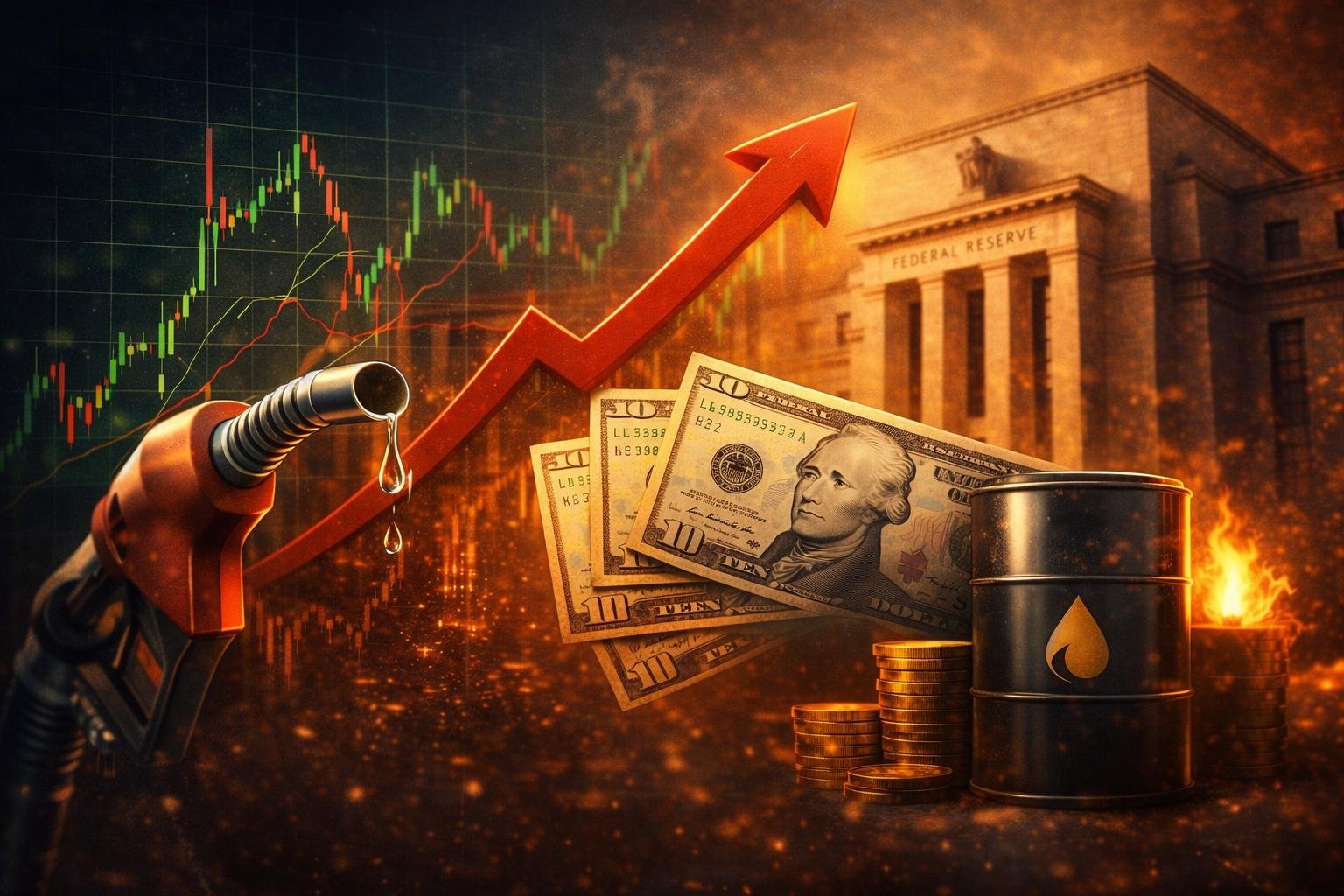
US inflation concerns rise as energy prices surge and the Federal Reserve faces growing pressure to manage economic stability amid ongoing geopolitical uncertainty and slowing growth signals.
Recent economic data suggests that inflation in the United States may be accelerating again, driven largely by rising energy costs linked to tensions in the Middle East. Analysts expect the Consumer Price Index (CPI) to show a sharp monthly increase, highlighting renewed inflationary pressure on households and policymakers. (Reuters)
The development comes at a time when the U.S. economy is already showing signs of slowing, creating a complex environment for the Federal Reserve as it balances inflation control with economic growth.
Inflation Pressures Intensify
Economists estimate that U.S. inflation could reach around 3.3 percent annually, marking a notable increase compared to previous months. (Trading Economics) This rise is largely attributed to higher gasoline and energy prices, which have surged amid disruptions linked to geopolitical tensions.
Monthly inflation is also expected to climb significantly, with forecasts pointing to one of the largest increases in recent years. (Trading Economics) The increase in energy costs is being passed on to consumers, raising concerns about the cost of living across the country.
In addition, consumer expectations for inflation are rising. Surveys from the Federal Reserve Bank of New York show that Americans now expect higher prices in the near term, particularly for fuel and essential goods. (Reuters)
Federal Reserve Faces Policy Dilemma
The Federal Reserve is now under increasing pressure to respond to persistent inflation while avoiding a slowdown in economic growth. Policymakers have emphasized that inflation remains above the central bank’s 2 percent target, and further action may be needed if price pressures continue. (Federal Reserve)
However, the situation is complicated by signs of slowing economic activity. U.S. GDP growth was recently revised down to just 0.5 percent for the fourth quarter, reflecting weaker consumer spending and reduced business investment. (AP News)
This combination of rising inflation and slowing growth has raised concerns about a potential stagflation scenario, where economic expansion stalls while prices continue to rise.
Energy Prices Drive Economic Uncertainty
Energy markets have become a key driver of economic uncertainty. Oil prices have surged close to $100 per barrel due to concerns about supply disruptions in the Middle East. (Guardian)
Higher oil prices directly impact transportation, production costs, and consumer expenses, contributing to broader inflationary pressures. Economists warn that sustained high energy prices could prolong inflation and delay potential interest rate cuts.
At the same time, financial markets remain sensitive to geopolitical developments. Even small changes in the situation can lead to sharp movements in stocks, bonds, and commodities.
Market Expectations Shift
Financial institutions and analysts are adjusting their expectations for interest rates. Some now believe that the Federal Reserve may delay or reduce the number of rate cuts expected in 2026 due to persistent inflation risks.
Bond market forecasts indicate that Treasury yields could remain elevated in the near term, reflecting uncertainty about inflation and monetary policy. (Reuters)
Despite these concerns, some policymakers maintain that the underlying fundamentals of the U.S. economy remain strong, supported by steady consumer spending and a resilient labor market. (Reuters)
Outlook for the US Economy
Looking ahead, the direction of the U.S. economy will depend on several key factors, including inflation trends, energy prices, and geopolitical stability.
If inflation continues to rise, the Federal Reserve may be forced to maintain higher interest rates for longer than previously expected. On the other hand, if geopolitical tensions ease and energy prices stabilize, inflationary pressures could begin to decline.
For now, investors and policymakers alike are closely monitoring incoming economic data, as it will play a crucial role in shaping the next phase of monetary policy and market direction.
For more insights, readers can explore additional finance and investing guides available on our platform.